
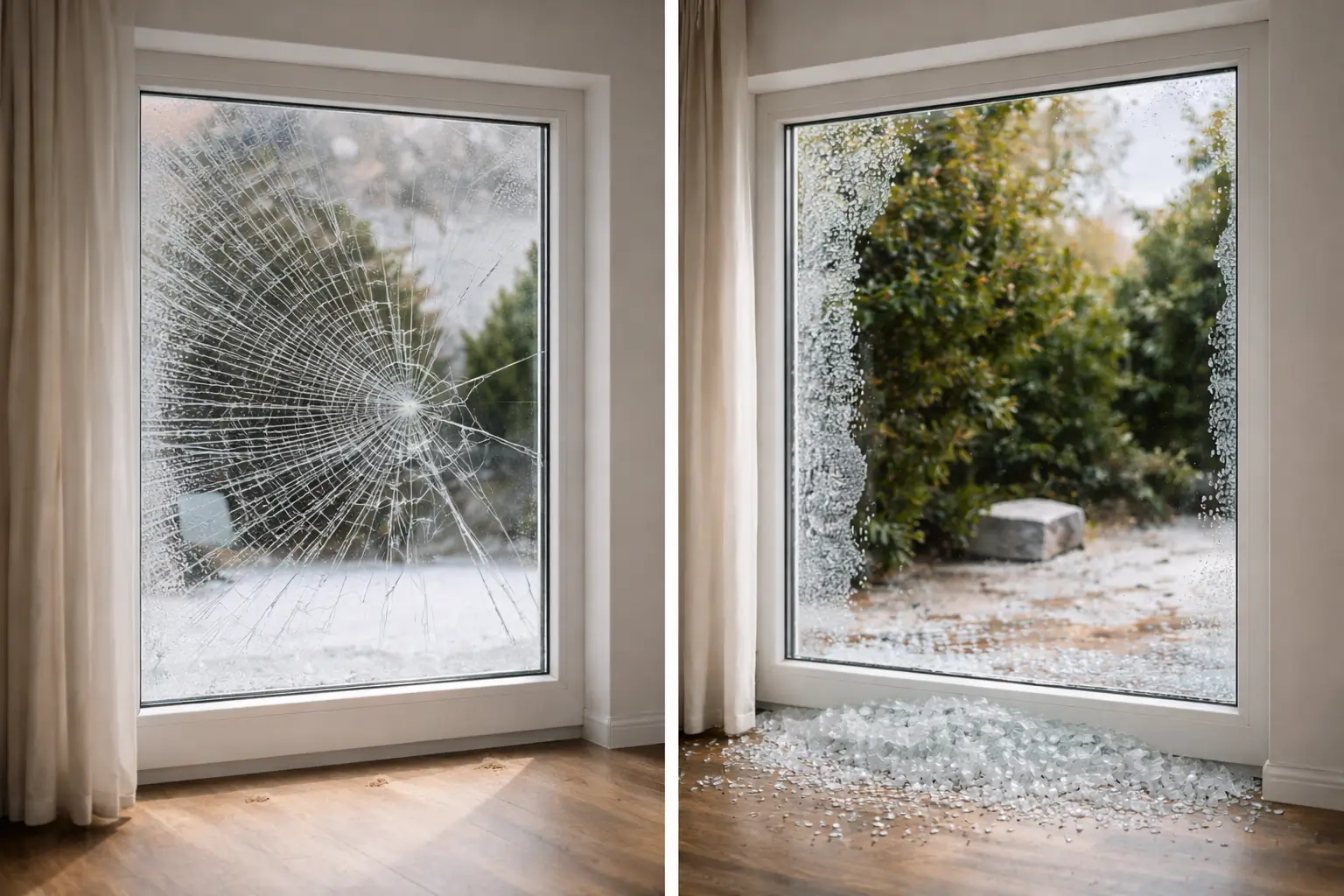
Homeowners in Toronto often encounter two common types of safety glass: laminated and tempered. Both are designed to improve durability and reduce injury risk, but they perform differently under impact and stress.
Understanding the differences helps determine which option is appropriate for windows, doors, and specific residential applications.
What Is Tempered Glass
Tempered glass is heat-treated to increase strength. When it breaks, it shatters into small, blunt fragments rather than sharp shards.
This makes it suitable for areas where safety is required, including patio doors and low-height windows.
What Is Laminated Glass
Laminated glass consists of two sheets of glass bonded with a plastic interlayer. When broken, the glass remains adhered to the interlayer instead of scattering.
This construction provides improved sound reduction and enhanced security performance.
Impact Resistance Comparison
Tempered glass is stronger than standard glass and resists direct impact well. However, once fractured, it breaks completely.
Laminated glass may crack upon impact but typically remains intact within the frame due to the internal interlayer.
Security Considerations
Laminated glass is often preferred in locations where forced entry resistance is important. The interlayer helps hold the panel together even after impact.
Tempered glass offers safety but does not provide the same level of post-break containment.
Sound Reduction Performance
Laminated glass generally performs better for noise reduction. The interlayer dampens vibration and reduces sound transmission.
Homes near busy streets in Toronto may benefit from upgrading through window glass replacement using laminated options.
Where Each Type Is Commonly Used
- Tempered glass: sliding doors, shower enclosures, low-level windows
- Laminated glass: street-facing windows, security-focused areas, noise-sensitive rooms
Building Code Requirements
Ontario building codes require safety glazing in specific locations, including doors and areas near walking surfaces.
If glass becomes damaged, professional glass repair in Toronto ensures replacement meets safety compliance.
When Professional Evaluation Is Necessary
Choosing between laminated and tempered glass depends on safety requirements, noise concerns, and security priorities.
For door applications, glass door replacement services can specify the correct safety-rated glass type.
FAQ
Is laminated glass stronger than tempered glass
Tempered glass is stronger against direct impact, but laminated glass holds together after breaking due to its interlayer.
Which glass type is better for noise reduction
Laminated glass generally provides better sound reduction because of the internal acoustic interlayer.
Is tempered glass required for doors
Yes. Building codes require safety glazing such as tempered glass in door applications.
Does laminated glass improve security
Yes. The interlayer helps prevent glass from falling apart after impact, making forced entry more difficult.
Can laminated glass be used in residential windows
Yes. It is often used in street-facing windows or homes seeking additional sound control and security.